
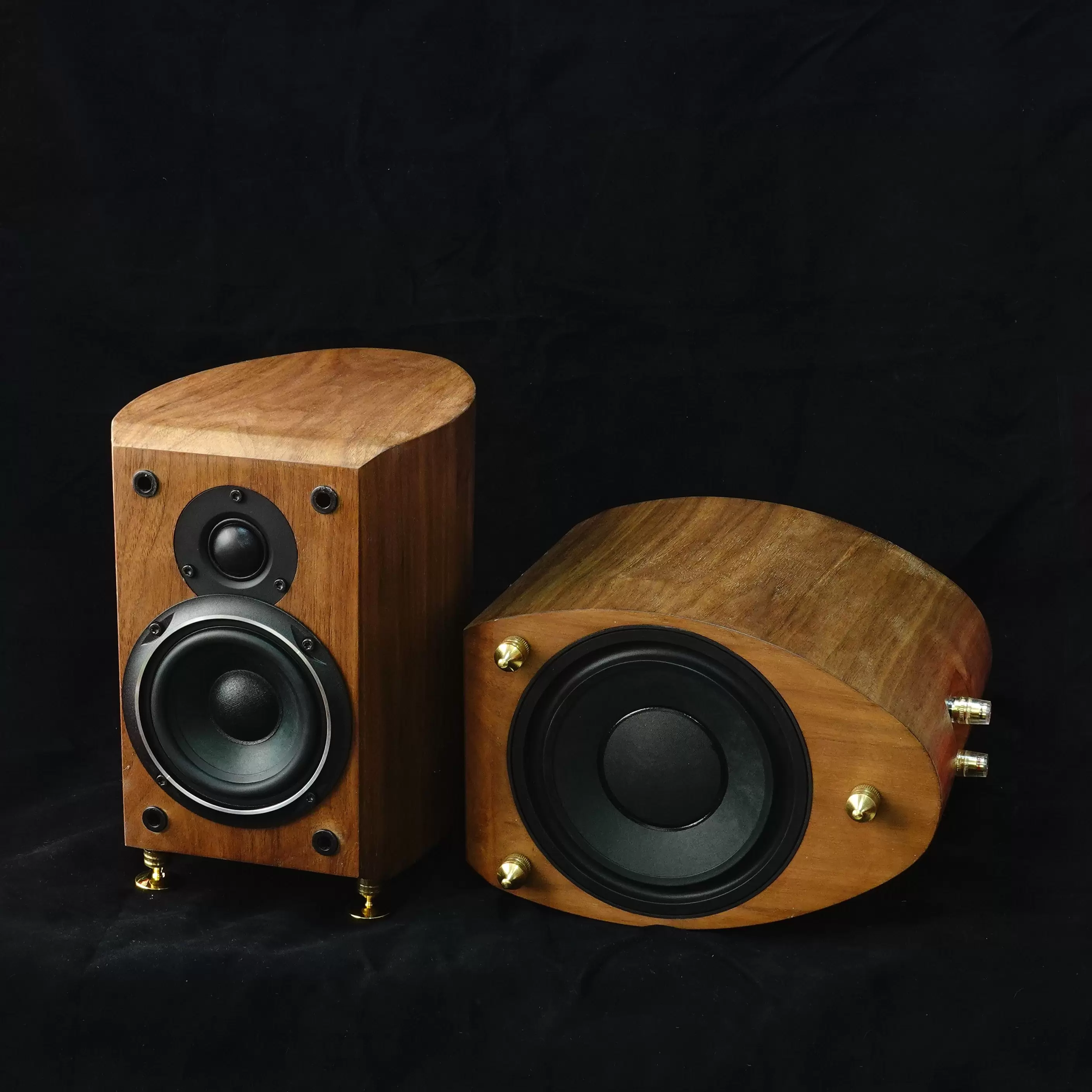
Discover the advantages of passive radiators compared to traditional bass port tubes and learn how this design delivers clearer, more precise bass.
Traditional bass port tubes are designed to help home speakers deliver deeper bass without needing a massive cabinet. However, while they are an efficient way to boost low-end power, standard cylindrical port tubes have a few key design limitations that can affect overall sound quality:
Air Turbulence and “Chuffing” Noise
When you crank up the volume, large amounts of air move rapidly back and forth through the tube. If the port opening is just a straight cylinder, the air hits the edges and creates turbulent vortices. This turbulence leads to an audible huffing or “chuffing” sound—a distracting noise that spoils clear bass passages during movie scenes or heavy music tracks.
Bass Compression at High Volume
At higher listening levels, air friction inside a standard tube builds up significantly. Instead of flowing smoothly, the air effectively gets choked, restricting the port’s output. As a result, the bass loses its punch and dynamic range right when you need it most, making powerful low frequencies sound compressed or muddy.
Midrange Leakage and Enclosure Limits
Because a port tube is essentially a hollow pipe, it naturally resonates at higher harmonic frequencies—much like an organ pipe. Unwanted midrange sound from inside the cabinet can leak out through the port, muddying vocal and instrumental clarity. Furthermore, tuning a small speaker to deliver ultra-deep bass requires a very long tube, which can be difficult to fit inside compact home audio cabinets without compromising airflow.